
Security Engineer Finally Completes Homegrown SIEM, Only Took 12 Years and Three Divorces
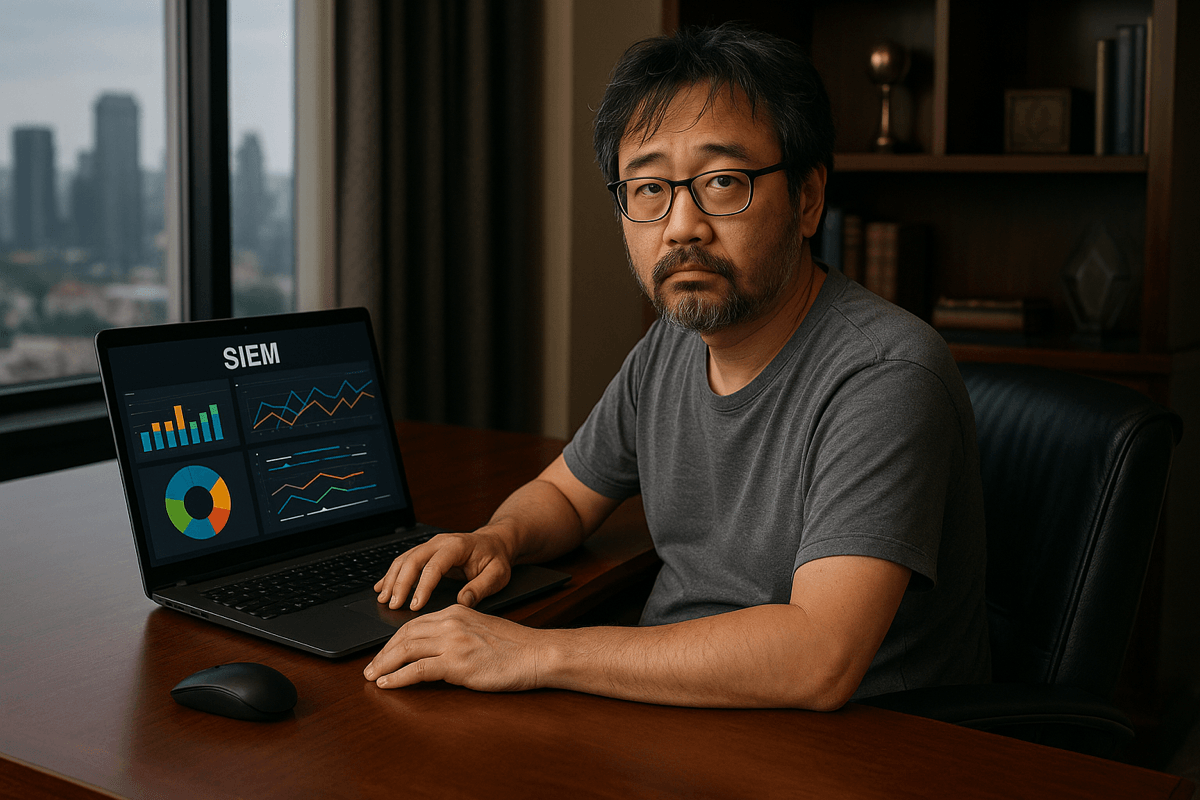

Security Engineer Finally Completes Homegrown SIEM, Only Took 12 Years and Three Divorces

Security engineer spends 12 years building custom SIEM instead of buying commercial solution, costs company $2.8M in salary alone, survives three divorces and four CISO resignations.
Security Engineer Finally Completes Homegrown SIEM, Only Took 12 Years and Three Divorces
Security Engineer Finally Completes Homegrown SIEM, Only Took 12 Years and Three Divorces
Security engineer spends 12 years building custom SIEM instead of buying commercial solution, costs company $2.8M in salary alone, survives three divorces and four CISO resignations.
SANTA CLARA, CA — In what industry analysts are calling "a testament to the human spirit's capacity for self-delusion," senior security engineer Marcus Chen officially declared his custom-built Security Information and Event Management (SIEM) platform "production-ready" last Tuesday, exactly 12 years, 7 months, and 23 days after he first uttered the fateful words, "How hard could it be to parse some logs?"
The platform, internally codenamed "Project Prometheus" before being renamed seventeen times—including brief stints as "LogMaster 3000," "SIEMple Solution," and inexplicably, "Derek"—now successfully ingests approximately 60% of the company's security logs on good days, provided Mercury isn't in retrograde and someone remembers to restart the Elasticsearch cluster every four hours.
"We're incredibly proud of what Marcus has accomplished," said CTO Jennifer Walsh of Nexus Dynamics, the mid-sized technology company that has somehow survived multiple ransomware attacks while waiting for their SIEM to materialize. "Sure, we could have purchased Splunk for $3 million back in 2013, but Marcus estimated he could build something better for just the cost of his salary. Technically, he was right—his salary over 12 years only came to $2.8 million."
The Journey of a Thousand Parsers Chen's odyssey began innocently enough during a 2013 planning meeting when the company's then-CISO suggested purchasing a commercial SIEM solution. According to meeting minutes obtained by this publication, Chen responded by pulling up a GitHub repository he'd created the night before, featuring 47 lines of Python that successfully parsed one type of Apache log. "Look, it's basically just regex and a database," Chen reportedly said, a phrase that would later be engraved on a "World's Most Optimistic Developer" mug presented to him by former colleagues at his 10-year project anniversary party, which he attended alone. By year two, Chen had successfully created what he called "a robust log ingestion pipeline" that could handle Windows Event Logs, provided they were first manually converted to CSV format and didn't contain any special characters, timestamps from daylight saving time periods, or the letter 'ñ'.
"The real breakthrough came in year four when I realized I needed to build my own time-series database," Chen explained, his eyes taking on the thousand-yard stare common among engineers who've written their own database engines. "Sure, InfluxDB existed, but it didn't support my proprietary log format that I invented because JSON was 'too mainstream.'"
The Architecture That Time Forgot The current architecture of Chen's SIEM, documented across 47 Confluence pages (38 of which are marked "DEPRECATED - DO NOT USE"), consists of:
- 14 different microservices, each written in a different programming language ("for resilience," Chen insists)
- A custom query language called SQRL (Security Query and Retrieval Language) that is "almost but not quite entirely unlike SQL"
- 847,000 lines of custom parsing rules, including 1,200 dedicated solely to parsing Slack notifications about lunch orders
- A machine learning component that Chen claims can "predict security incidents with 98% accuracy," though it currently only predicts that security incidents will happen "sometime in the future"
- A frontend built in a JavaScript framework that was deprecated six years ago
"The beauty of the system is its flexibility," Chen noted, demonstrating how a simple query to find failed login attempts only required writing 340 lines of SQRL code and waiting approximately 17 minutes for results.
Industry Recognition The project has not gone unnoticed by the broader security community. "This is absolutely remarkable," said Dr. Amanda Foster, a psychiatrist who specializes in treating technology professionals. "I've written three papers on Marcus's case. The level of sustained delusion required to keep building a SIEM for 12 years is genuinely unprecedented in the literature."
Meanwhile, Gartner analyst Tom Richardson called Chen's SIEM "a fascinating case study in the sunk cost fallacy achieving sentience." "What's particularly impressive," Richardson added, "is that Marcus managed to rebuild the entire thing from scratch four times—once because he decided to switch from Python 2 to Python 3, once because he read a blog post about microservices, once because he discovered Rust, and once because, quote, 'the vibes were off.'" The Human Cost The project's impact extended well beyond technology.
Chen's first wife, Sandra, left him in year three after finding their bedroom converted into a "log storage testing facility" featuring 47 Raspberry Pis running custom agents. His second marriage ended when he spent their honeymoon debugging a correlation rule that was triggering on breakfast orders. "I knew it was over when he tried to name our son 'Graylog,'" his second ex-wife, Patricia, told reporters. "He said it was a family name."
Chen's current relationship status is "in a committed relationship with Grafana dashboards," according to his LinkedIn profile. A New Hope Despite the challenges, Nexus Dynamics' new CISO, brought in after the previous four quit citing "SIEM-related trauma," remains cautiously optimistic. "Marcus tells us he just needs another six months to implement user authentication, then we can finally sunset our current security monitoring solution," he said, referring to an intern named Dave who manually reviews firewall logs in Excel.
The company has also quietly begun a parallel project, code-named "Project Just-Buy-Splunk-Already," though Chen remains unaware of its existence. "The real victory here is the journey," Chen concluded, staring wistfully at a wall covered in architectural diagrams that resembled the fevered sketches of a Victorian-era inventor trying to create a perpetual motion machine. "Sure, modern SIEMs now have features like cloud-native architectures, automated threat detection, and the ability to actually work, but can they say they were built with love? And regex? So much regex?"
At press time, Chen was reportedly starting work on "SIEM 2.0," which he promises will be "completely different" and use agentic AI for reasons he has yet to determine. Update: As this article was going to print, Nexus Dynamics announced it had been acquired by Microsoft, whose security team immediately decommissioned Chen's SIEM. On the plus side, Chen's blog series about the SIEM project got 73 views.

About the Author

Harry Wetherald
Staff WriterHarry Wetherald is the CEO and Co-Founder of Maze.
Subscribe before we're patched
Like a vitamin you ingest with your eyes. The best cybersecurity parody, delivered.
Trending

French Locksmith Named Claude Launches Line of Padlocks; Cybersecurity Stocks Lose $18 Billion

Riot Breaks Out at Corporate Headquarters after Security Team Introduces “Shift Left”
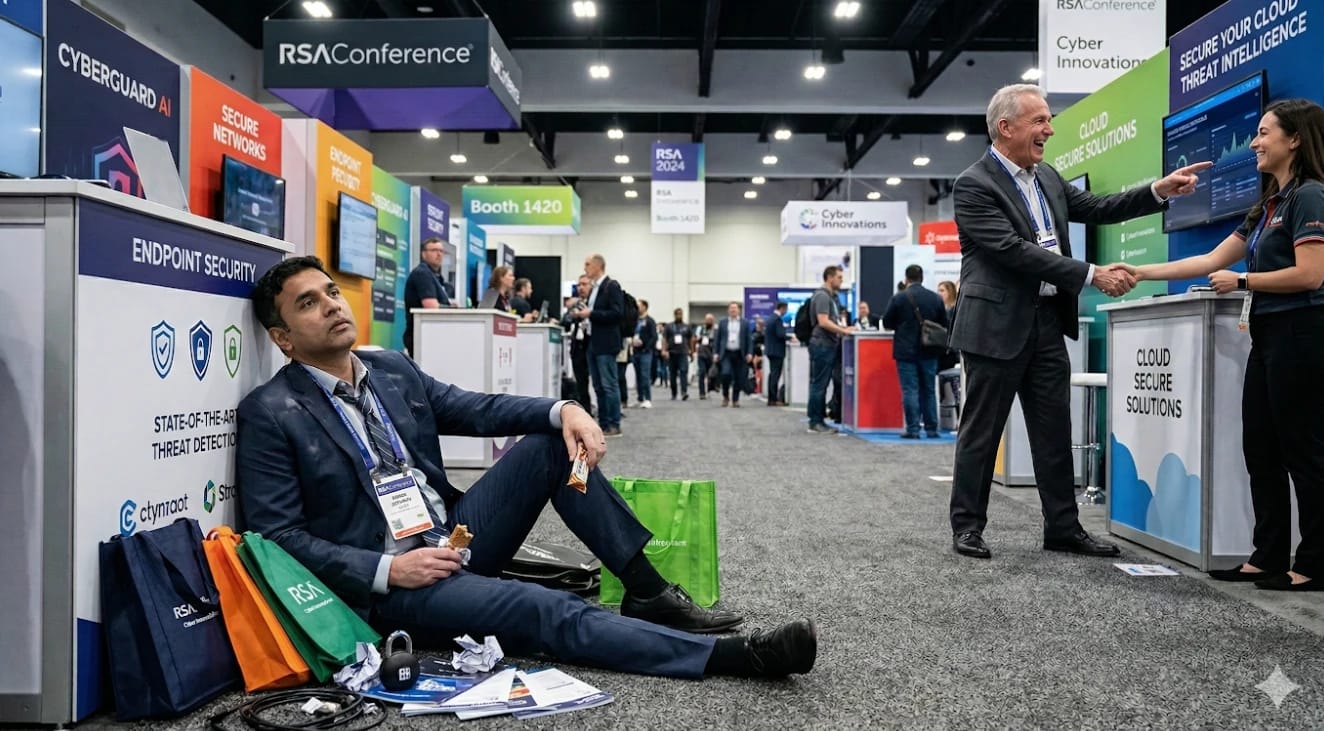
Judge Sentences CISO to 8 Consecutive Hours on RSA Expo Floor as Formal Punishment for Security Breach
Related Coverage
Trending
French Locksmith Named Claude Launches Line of Padlocks; Cybersecurity Stocks Lose $18 Billion
Riot Breaks Out at Corporate Headquarters after Security Team Introduces “Shift Left”