Project Budget Dump: The Billion-Dollar Plan to Buy More Nothing, Faster


Project Budget Dump: The Billion-Dollar Plan to Buy More Nothing, Faster

After exhausting all other options like 'thinking' and 'planning,' the cybersecurity industry has unveiled Project Budget Dump, a $4.6 billion initiative to help enterprises buy their way to security nirvana through the aggressive deployment of redundant platforms, poorly integrated dashboards, and duplicated functionality across multiple vendors. Early adopters proudly report running five CASBs, three EDRs, two SIEMs, and one prayer—because if you can't outthink the attacker, you can at least outspend them until your CFO starts asking uncomfortable questions about why you're still getting breached.
Project Budget Dump: The Billion-Dollar Plan to Buy More Nothing, Faster
Project Budget Dump: The Billion-Dollar Plan to Buy More Nothing, Faster
After exhausting all other options like 'thinking' and 'planning,' the cybersecurity industry has unveiled Project Budget Dump, a $4.6 billion initiative to help enterprises buy their way to security nirvana through the aggressive deployment of redundant platforms, poorly integrated dashboards, and duplicated functionality across multiple vendors. Early adopters proudly report running five CASBs, three EDRs, two SIEMs, and one prayer—because if you can't outthink the attacker, you can at least outspend them until your CFO starts asking uncomfortable questions about why you're still getting breached.
SAN FRANCISCO, CA — In a bold demonstration of the cybersecurity industry’s commitment to doing literally anything except strategy, a coalition of vendors today announced Project Budget Dump, a $4.6 billion initiative to help enterprises “accelerate the acquisition of tools they’ll never fully deploy.”
According to press materials, the project’s mission is to “enable CISOs to spend money faster than adversaries can innovate,” effectively turning procurement into the front line of national defense.
“If you can’t outthink the attacker, outspend them,” declared Clint Sparrow, Chief Evangelist at DefenSys 9000, one of Budget Dump’s founding members.
“Strategy is slow. Invoicing is forever.”
When in Doubt, Buy Another Box
The project was launched at RSA Conference 2025 in a laser-filled keynote featuring a 40-foot LED wall flashing words like AI-powered, self-healing, cyber-mesh, trust-fabric, and autonomous orchestration layer.
A visibly emotional CISO from a Fortune 100 manufacturer wiped away a tear:
“It’s beautiful. I don’t know what it actually does, but my board will love the screenshots.”
Budget Dump’s charter document describes a simple, scalable mission:
‘To create measurable security outcomes through the aggressive deployment of redundant platforms, poorly integrated dashboards, and duplicated functionality across multiple vendors, while being unencumbered by strategic reality or decision making.’
Among the early adopters are firms proudly running five CASBs, three EDRs, two SIEMs, and one prayer.
Strategy Is for Nerds
When asked whether Project Budget Dump might eventually incorporate strategy or alignment with Zero Trust principles, a spokesperson from Cyberphoria Labs laughed so hard their lanyard snapped.
“Strategy? That’s a professional-services upsell. Our customers want immediate ROI — Return on Illusion.”
Inside sources say the consortium already rejected a proposal to include “adversary emulation exercises” after determining it had “too much thinking per dollar.”
Instead, participants will receive a Budget Dump Readiness Score™, calculated solely by the number of six-figure invoices they can approve before the subsequent quarterly breach.
The Economics of Eternal Spending
According to Gartner for Gullible Enterprises, 74 % of large organizations admit they can’t fully operationalize half the tools they already own. Despite this, global cybersecurity spending will grow another 12 % this year — mostly on new dashboards to explain why nothing has improved.
“It’s like we’re fighting ransomware with receipts,” said Marla Tenderson, VP of Overengineering at SentinelDome. “If we buy enough overlapping platforms, one of them will accidentally work.”
Meanwhile, attackers — most of whom operate on used laptops in coffee shops — continue to innovate for the cost of a monthly Wi-Fi subscription.
“Adversaries meet us where we don’t focus: the browser, the identity layer, the human, the network, the asset, you know all those places that years of research tell us we should focus,” said Dr. Zero Trust.

“But sure, keep buying more boxes. Hope your firewall enjoys its fourth context-aware AI plugin.”
Technical Excellence, Marketing First
Project Budget Dump vendors tout several groundbreaking innovations, including:
Adaptive Procurement Frameworks — automates justification memos for redundant purchases powered by AI that knows how much a company can spend and builds bids based on those numbers for "optimality".
Autonomous Blame-Shifting Engines — instantly redirects fault to “supply chain issues.”
Dynamic Visibility Meshes — ensure you can see every alert you’ll never respond to, and that will make your SoC operations team vomit with rage as they can't keep up.
The system's newest module, InsightSphere XT, integrates directly with your CFO’s Amex card.
Consequences (That No One Will Learn From)
Within weeks of Budget Dump’s debut, major enterprises rushed to “modernize” by adding yet another Zero Trust “platform” that mostly rebrands existing VPNs.
One unnamed federal contractor bragged that after adopting Budget Dump principles, it reduced its mean-time-to-breach-response from 42 days to 400, thanks to “AI-driven remorse analytics.”
Stock analysts hailed the movement as “a major win for quarterly revenue and PowerPoint animation vendors, as well as auditing firms.”
Coming Soon: Strategy-as-a-Service™
Not content to rest on its laurels, the consortium teased its following product — Strategy-as-a-Service™, an on-demand PowerPoint deck explaining what you should have done after the exploit.
For an additional fee, enterprises can add the “Visionary Regret” module, which automatically schedules follow-up webinars titled “Lessons Learned (Again).”
Each subscriber receives a complimentary mug reading:
“Hope Is Not a Control.”
Dr. Zero Trust’s Final Word
Project Budget Dump proves what many of us already knew: cybersecurity isn’t broken — it’s just mismanaged at scale.
If your answer to every incident is to buy another platform instead of fixing the plan, congratulations — you’re not building security. You’re sponsoring next year’s RSA keynote, “Why Strategy Still Isn’t a SKU.”
About the Author

Dr. Chase Cunningham
Guest ContributorDr. Zero Trust — creator of the ZTX Framework. Advisor, strategist, and keynote voice shaping Zero Trust adoption worldwide.
Subscribe before we're patched
Like a vitamin you ingest with your eyes. The best cybersecurity parody, delivered.
Trending

French Locksmith Named Claude Launches Line of Padlocks; Cybersecurity Stocks Lose $18 Billion

Riot Breaks Out at Corporate Headquarters after Security Team Introduces “Shift Left”
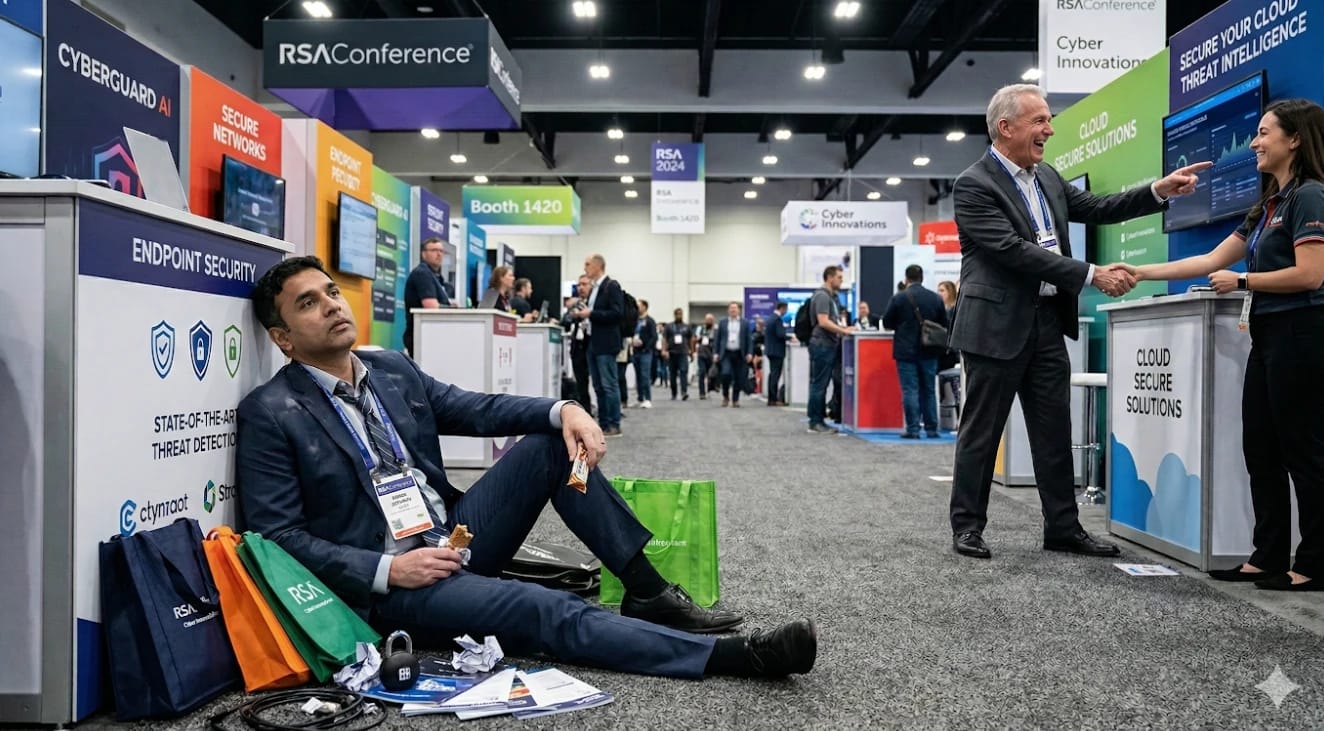
Judge Sentences CISO to 8 Consecutive Hours on RSA Expo Floor as Formal Punishment for Security Breach

Related Coverage
Trending
French Locksmith Named Claude Launches Line of Padlocks; Cybersecurity Stocks Lose $18 Billion
Riot Breaks Out at Corporate Headquarters after Security Team Introduces “Shift Left”