

Incident Manager Can't Sleep During First Week Off-Call in 18 Months


After 18 months of continuous on-call duty, incident manager Marcus Chen finally got a break and immediately developed severe insomnia from the lack of 3 AM alerts. By Wednesday, colleagues found him in a conference room at 2 AM, attempting to DDoS the company's staging servers just to feel something again.
Incident Manager Can't Sleep During First Week Off-Call in 18 Months
After 18 months of continuous on-call duty, incident manager Marcus Chen finally got a break and immediately developed severe insomnia from the lack of 3 AM alerts. By Wednesday, colleagues found him in a conference room at 2 AM, attempting to DDoS the company's staging servers just to feel something again.
SAN FRANCISCO — Marcus Chen, a Senior Incident Manager at cloud security startup ShieldLogic, has been unable to achieve restful sleep for the past six days after his on-call rotation ended, sources close to the exhausted 34-year-old confirmed Tuesday.
Chen, who had been on primary escalation duty for the company's 24/7 security operations center since March 2024, reportedly spent his first night off-rotation lying awake until 4 AM, his body tensed in anticipation of PagerDuty alerts that never came.
"It's the silence that gets you," Chen explained, dark circles visible beneath his eyes during a 2 PM Zoom call where he appeared to be wearing the same hoodie for the third consecutive day. "Every few minutes, I'd jolt awake convinced I'd missed a P1 incident. By Wednesday, I was checking my phone every twelve seconds just to make sure the battery hadn't died."
The incident manager's condition has reportedly deteriorated to the point where he attempted to trigger his own alerts by intentionally misconfiguring a test environment, only to be stopped by his colleague Sarah Martinez, who found him at 2 AM frantically trying to DDoS the company's staging servers.
"We found Marcus in conference room B with three laptops open, running what appeared to be a custom script designed to generate realistic-looking Datadog anomaly alerts," said Martinez, ShieldLogic's VP of Engineering. "He'd even set up a spare phone to buzz every 45 minutes. When we asked what he was doing, he just kept saying 'the quiet is too loud.'
Chen's struggles have been recognized by his healthcare provider, who diagnosed him with what sleep specialist Dr. Patricia Okonkwo calls "Pavlovian Alert Dependency Syndrome," or PADS.
"What we're seeing is a complete inversion of the normal stress response," Dr. Okonkwo explained. "Marcus's nervous system has been conditioned to expect interruption every 30-90 minutes for so long that the absence of critical alerts registers as an existential threat. His body literally doesn't know how to sleep without being woken up."
The condition appears to be more common than previously thought. A recent survey by the DevOps Research Institute found that 67% of incident managers reported experiencing "phantom vibrations" from their pagers during off-call periods, while 43% admitted to subscribing to unrelated alert services just to maintain their disrupted sleep patterns.
Chen's partner, Jessica Wong, has documented the decline. "Last Tuesday, he set up our smart home system to generate randomized alerts throughout the night," Wong reported. "Our Nest thermostat now sends him critical notifications about temperature fluctuations of 0.3 degrees. Our Roomba is configured as a 'production incident.' I woke up at 3 AM to find him on a bridge call with himself, discussing rollback procedures for the refrigerator's ice maker."
ShieldLogic's executive team initially dismissed Chen's struggles as a adjustment period, but has since been forced to acknowledge the severity of the situation after Chen showed up to a board meeting with printed copies of resolved incidents from 2023, asking if anyone wanted to "do a quick post-mortem for old time's sake."
"We're taking Marcus's wellbeing very seriously," said ShieldLogic CEO Brad Thornton in a statement. "That's why we're offering him the opportunity to return to on-call rotation immediately, or alternatively, access to our new Employee Wellness initiative, which includes a white noise machine that plays a soothing mix of Slack notification sounds and PagerDuty alert chimes."
The company has also begun exploring a "weaning protocol" developed by occupational therapist Dr. James Liu, which gradually reduces alert frequency over a six-week period. The program has shown promise in early trials, though Dr. Liu noted that several participants dropped out after experiencing what they described as "unbearable comfort."
As of press time, Chen has accepted ShieldLogic's offer to return to on-call duty, telling colleagues he "just needs one good P1 database corruption incident" to feel like himself again. His first alert came at 2:47 AM Thursday morning. Friends say he's never looked more rested.

About the Author

Phil O'Hagan
Staff WriterSubscribe before we're patched
Like a vitamin you ingest with your eyes. The best cybersecurity parody, delivered.
Trending

French Locksmith Named Claude Launches Line of Padlocks; Cybersecurity Stocks Lose $18 Billion

Riot Breaks Out at Corporate Headquarters after Security Team Introduces “Shift Left”
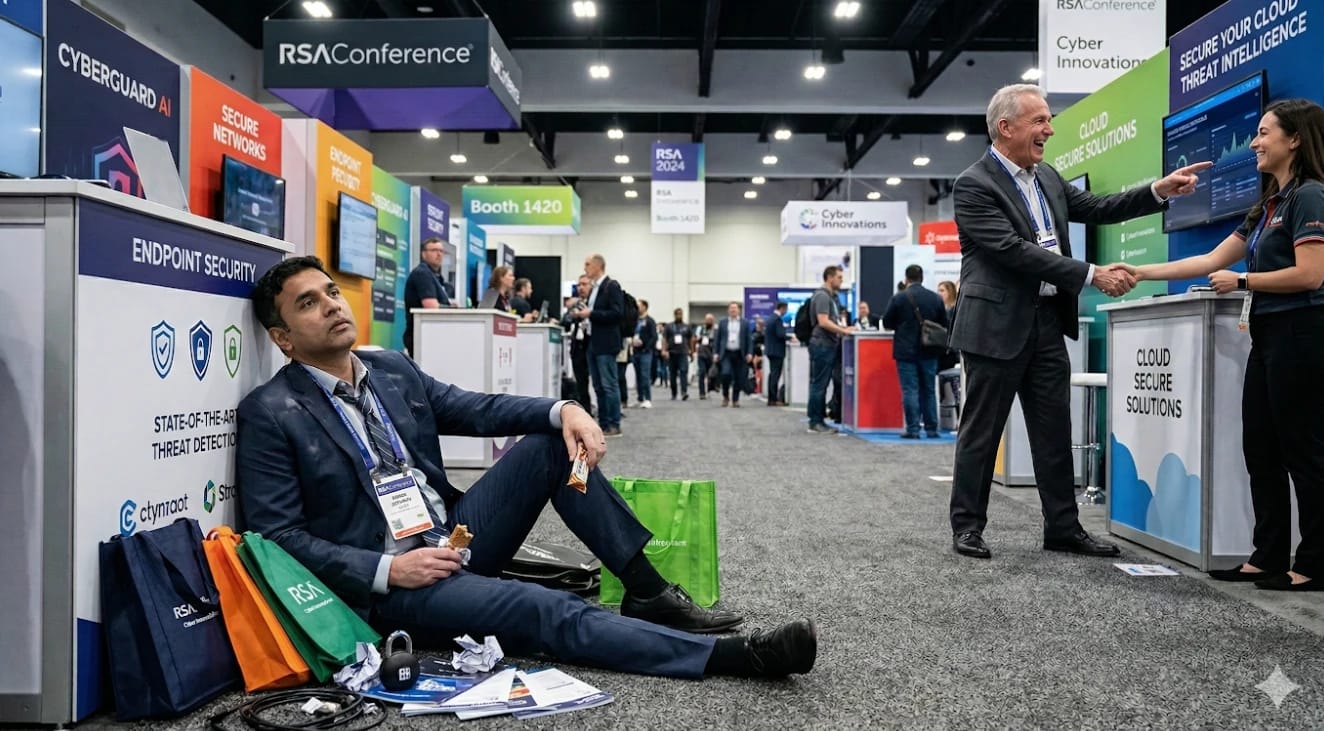
Judge Sentences CISO to 8 Consecutive Hours on RSA Expo Floor as Formal Punishment for Security Breach

Related Coverage
Trending
French Locksmith Named Claude Launches Line of Padlocks; Cybersecurity Stocks Lose $18 Billion
Riot Breaks Out at Corporate Headquarters after Security Team Introduces “Shift Left”