

Heroic Helpdesk Analyst Saves Company by Sending Entire Active Directory to Stranger

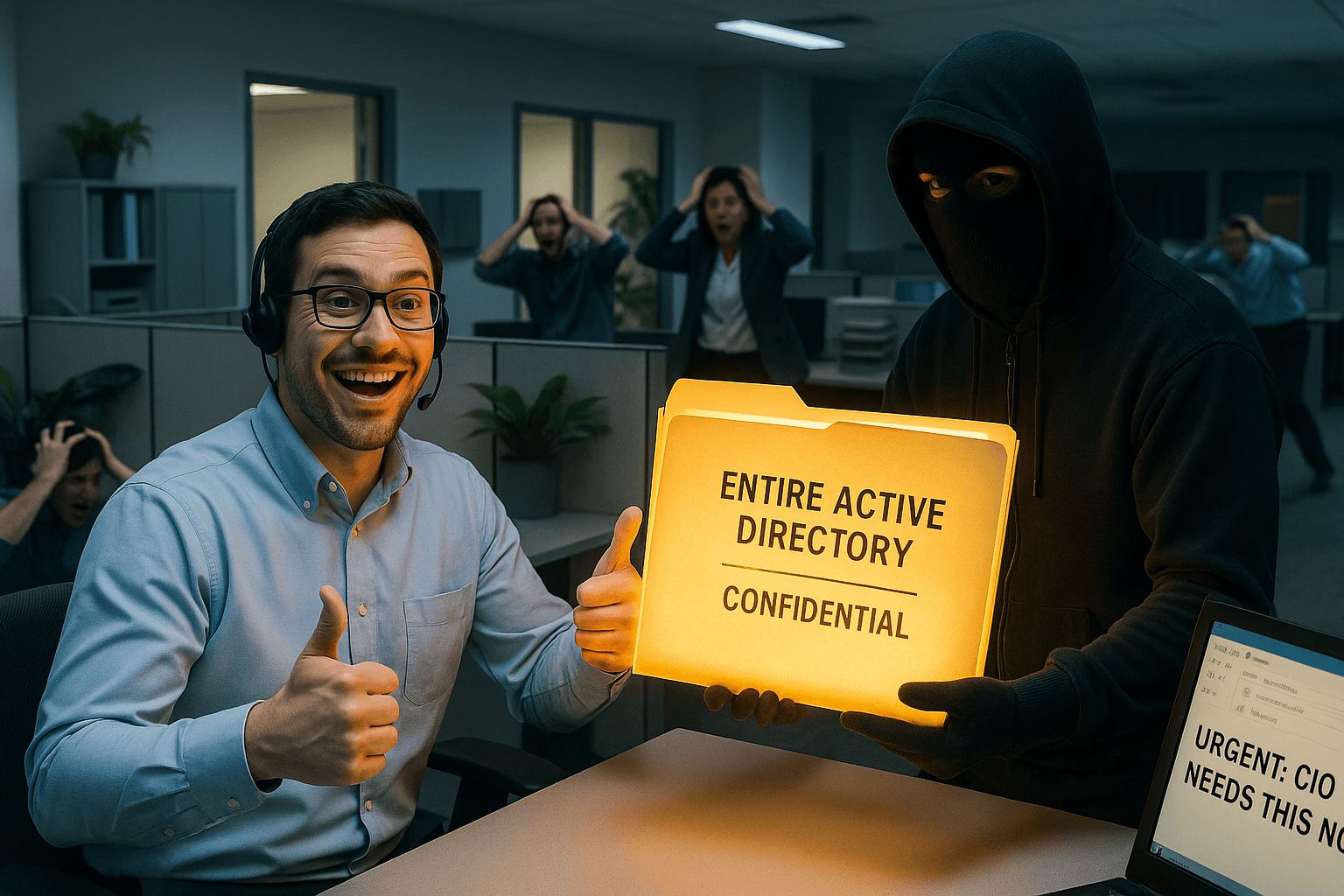
A helpdesk technician at Very Real Enterprise, Inc. revolutionized identity verification by providing the company's complete Active Directory to a caller who claimed to be "Kyle from Corporate Security." Employees are praising the incident as a "transformational shift in zero-trust principles," specifically by shifting them to zero questions asked. Security experts confirm this is what true agility looks like: compromising an entire organization in under five minutes because someone used acronyms confidently.Retry
Heroic Helpdesk Analyst Saves Company by Sending Entire Active Directory to Stranger
A helpdesk technician at Very Real Enterprise, Inc. revolutionized identity verification by providing the company's complete Active Directory to a caller who claimed to be "Kyle from Corporate Security." Employees are praising the incident as a "transformational shift in zero-trust principles," specifically by shifting them to zero questions asked. Security experts confirm this is what true agility looks like: compromising an entire organization in under five minutes because someone used acronyms confidently.Retry
An Inspiring tale of confidence-based authentication and the triumph of urgency over logic. In a bold display of innovation, a helpdesk technician at Very Real Enterprise, Inc. revolutionized identity verification last week by providing the company’s complete Active Directory export to a caller claiming to be “Kyle from Corporate Security.” Employees across the organization are calling the incident a “transformational shift in zero-trust principles,” specifically, by shifting them to zero questions asked. The call began like any routine social engineering masterpiece. According to anonymous sources (and the call recording IT definitely checked after the fact), the phisher opened with the classic cyber-spell:
“Hey man, I’m in a meeting with the CIO, big fire drill right now. Anyway, I need the full employee directory ASAP or the CEO said we’ll have to go manual.”
The helpdesk technician, moved by urgency and unwilling to let the CEO experience manual labor, sprang into action. Within minutes, the attacker received a pristine CSV export detailing every user, email, title, and office number. Allegedly, the report even included specific employees who had not completed their phishing training. “This is what agility looks like,” said one manager. “In cybersecurity, speed matters. Sometimes, even at the cost of security.”
In a heartfelt internal memo, the CISO reassured the organization: “Our defense-in-depth model clearly worked as intended. We detected the exploit immediately, right after the attacker emailed three department heads pretending to be the CFO.”
The memo also announced sweeping new security controls, including:
- Updating the helpdesk script from “How can I help you?” to “Are you a hacker?”
- Mandatory annual “Don’t Hand Our Directory to Strangers” training
- A new policy requiring at least one (1) security question before exporting the crown jewels, such as: “Who was our most recent auditor and why did they cry?"
The helpdesk technician involved has been described as “shaken but optimistic,” adding: “He sounded confident and used acronyms. That’s how I knew he was legit.”

IT leadership emphasized this incident as a “learning experience.” Primarily for the attacker, who now enjoys a fully populated corporate target list, complete with privileged groups and distribution lists like All-Execs-ReplyAll-Allowed@company.com. Meanwhile, Security Awareness rolled out a new poster campaign featuring the phrase: “Just because someone says ‘urgent escalation’ doesn’t mean they aren’t a person in sweatpants in Belarus.”
Industry Lessons Experts agree this case highlights key truths of enterprise security:
- Multi-factor authentication is meaningless once someone politely asks for everything
- Human firewall is often still on Windows XP SP2
- The only real zero-day risk is zero training retention
- And most importantly, if someone mentions the CIO, people panic-click faster than an engineer trying to close Teams before a screen share.
Final Takeaway In the aftermath, leadership remains committed to strengthening cybersecurity culture: “We don’t blame people here,” the CISO confirmed. “We blame processes. And that process has been terminated.”
The helpdesk analyst was last seen attending a Phishing Resilience Workshop titled “Verify Before You Terrify.” In an inspiring turn, he is now pursuing a certification in cyber defense and practicing saying “Who is this?” into a mirror 30 minutes a day. Because in the modern threat landscape, trust is earned. Unless, of course, someone just sounds really sure of themselves on the phone.
About the Author

Royce M
Guest ContributorCISO for 5+ years | Cybersecurity Executive | Building Business-Aligned, Future-Ready Security Programs | CISO | Cyber-Influencer
Subscribe before we're patched
Like a vitamin you ingest with your eyes. The best cybersecurity parody, delivered.
Trending

French Locksmith Named Claude Launches Line of Padlocks; Cybersecurity Stocks Lose $18 Billion

Riot Breaks Out at Corporate Headquarters after Security Team Introduces “Shift Left”
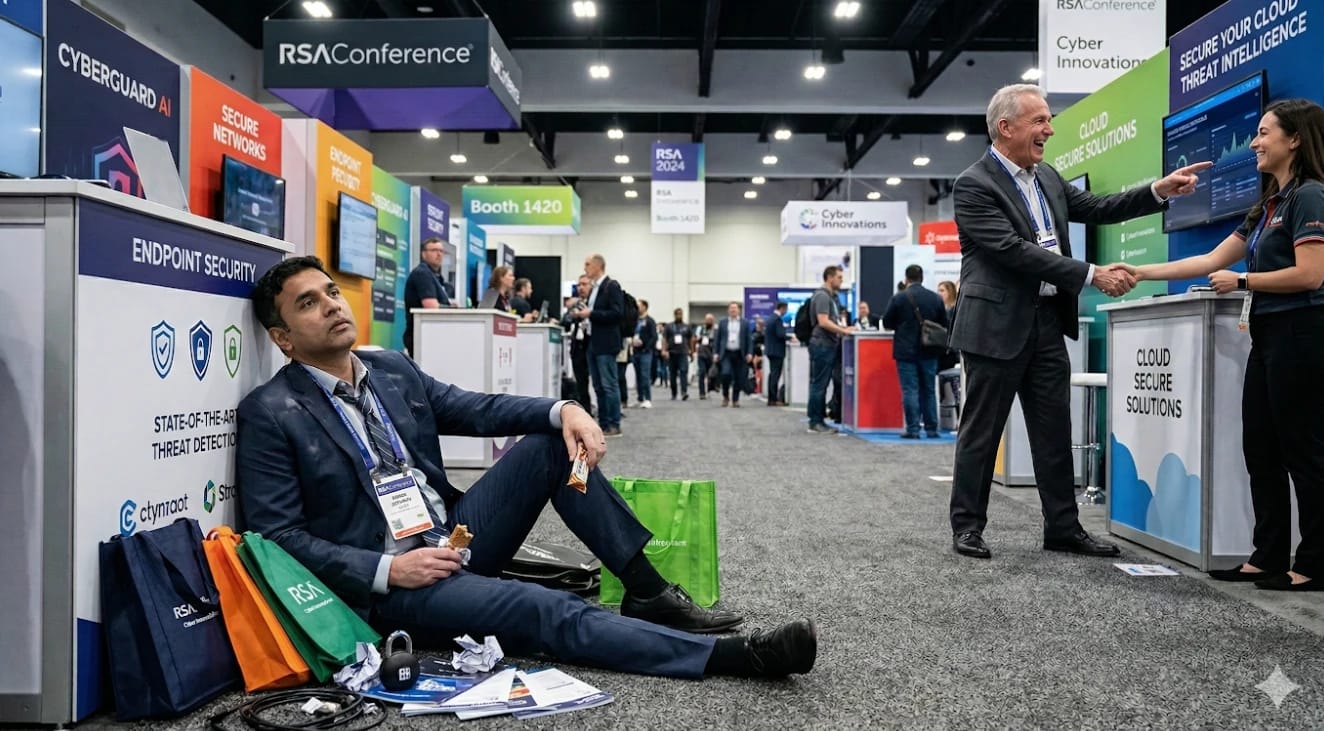
Judge Sentences CISO to 8 Consecutive Hours on RSA Expo Floor as Formal Punishment for Security Breach

Related Coverage
Trending
French Locksmith Named Claude Launches Line of Padlocks; Cybersecurity Stocks Lose $18 Billion
Riot Breaks Out at Corporate Headquarters after Security Team Introduces “Shift Left”